
Muhammad Usman Tahir is a Postdoctoral Researcher at the Department of Energy, Aalborg University, Denmark. His research focuses on the reliability of power electronic converters for renewable energy systems, including condition monitoring, predictive maintenance, fault-tolerant converter control, and physics-based lifetime modelling. Within the Horizon Europe SOLARIS project, he develops intelligent inverter topologies that combine real-time control with long-term reliability assessment to improve the performance and lifetime of photovoltaic systems.
Seyed Amir Hosseini is a Postdoctoral Researcher at the Department of Energy, Aalborg University, Denmark. His research focuses on power electronics, renewable energy systems, and the reliability of power electronic converters. His work includes advanced converter control, condition monitoring, fault-tolerant operation, and the development of intelligent solutions for improving the reliability and resilience of photovoltaic and wind energy systems. Within the Horizon Europe SOLARIS project, he contributes to developing innovative topologies that enhance the performance, reliability, and sustainability of future renewable energy infrastructure.
Saeed Peyghami is an Associate Professor at the Department of Energy, Aalborg University, Denmark. His research interests include renewable energy integration, power electronics, power system reliability, and resilient energy systems. He has extensive experience in developing reliability-oriented solutions for power electronic converters used in renewable energy applications. As a key researcher in the Horizon Europe SOLARIS project, he works on intelligent power conversion technologies that improve reliability, flexibility, and long-term operation of photovoltaic systems, supporting Europe’s transition toward a sustainable and carbon-neutral energy future.
Prof. Pooya Davari is a Professor at the Department of Energy, Aalborg University, Denmark. His research focuses on electromagnetic interference and compatibility (EMI/EMC) of power electronics, advanced control of power converters, renewable energy systems, and intelligent energy conversion technologies. His work spans the design, control, and reliability of power electronic systems for photovoltaic and wind energy, electric transportation, and energy storage applications. Within the Horizon Europe SOLARIS project, he contributes to the development of innovative converter topologies that enhance the reliability and long-term performance of renewable energy systems.
Modern solar inverters are becoming more than power converters. They are evolving into intelligent systems that can monitor their own health, reduce wear, and help operators make better maintenance decisions.
Solar power is growing, but so is the need for reliability
Across Europe and around the world, solar energy is becoming one of the fastest-growing sources of electricity. Large solar farms and rooftop photovoltaic (PV) systems are helping reduce carbon emissions and support the transition towards a cleaner energy future. Most people associate solar power with PV panels, but another component is just as important: solar inverters. The inverter converts the direct current (DC) produced by solar panels into alternating current (AC), which can be used by homes, businesses, and the utility grid.
Without the inverter, solar panels cannot deliver usable electricity. As solar installations continue to expand, ensuring that these inverters operate reliably for twenty years or more has become a major engineering challenge.
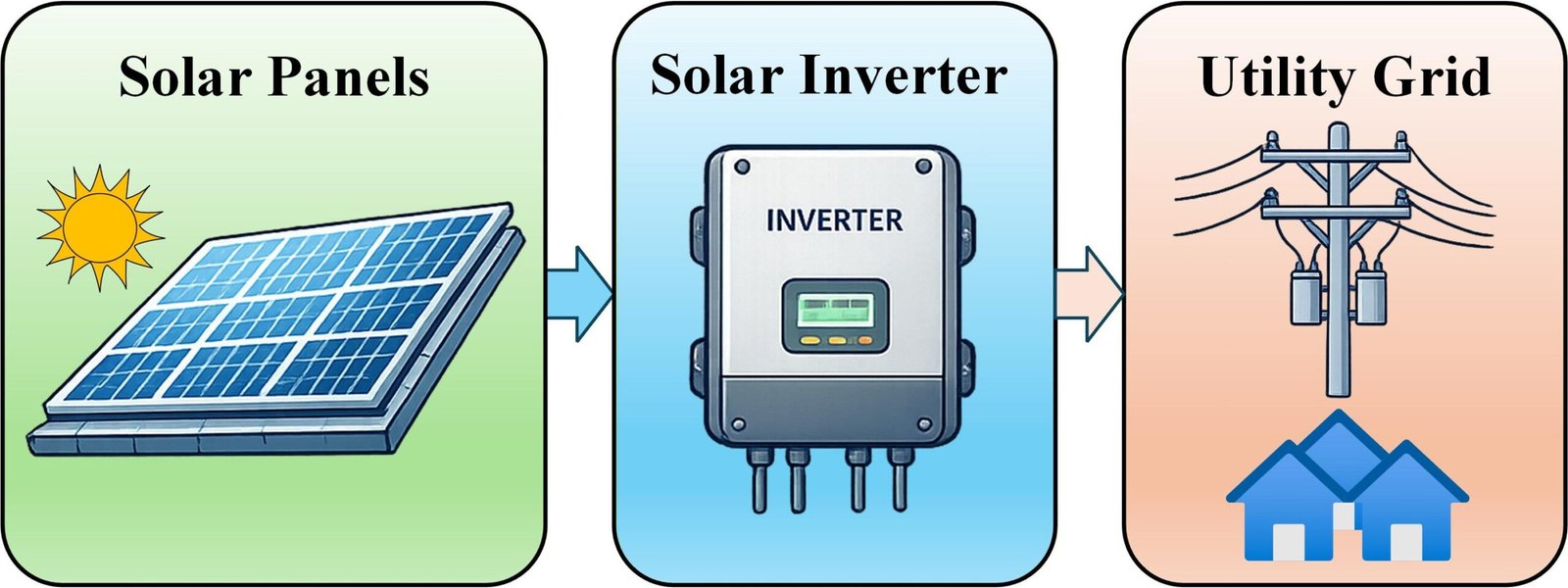
Figure 1. Solar energy conversion from solar panels to the utility grid.
Why do solar inverters fail?
Solar inverters work under demanding conditions every day. They continuously respond to changing sunlight, varying temperatures, fluctuating electrical loads, and grid conditions. At the same time, the semiconductor switches inside the inverter, turn on and off thousands of times every second. Although these devices are designed for long service, repeated electrical and thermal stress gradually causes them to age. Over time, tiny amounts of damage accumulate inside the power electronic components. Eventually, this degradation can lead to unexpected failures, reducing energy production and increasing maintenance costs. For large solar farms, even short periods of downtime can represent significant energy losses.
Solution 1: Intelligent Condition Monitoring
Traditional maintenance is largely reactive. Components are typically repaired or replaced only after a fault has occurred, resulting in unexpected outages and costly maintenance interventions. Future PV inverters follow a different approach. Instead of waiting for failures, they continuously monitor their operating conditions using measurements such as voltage, current, and device temperature. These electrical and thermal measurements provide valuable information about the health of critical power electronic components. By continuously observing these health indicators, early signs of degradation can be detected long before they develop into serious failures. This enables maintenance decisions to be based on the actual condition of the inverter rather than fixed maintenance schedules.
Solution 2: Reliability Assessment and Lifetime Prediction
Condition monitoring alone is not sufficient. The measured operating data must be translated into meaningful information about component health and remaining lifetime. Within the Horizon Europe SOLARIS project, researchers at Aalborg University combine real-time measurements with physics-based lifetime models to estimate accumulated damage and predict the remaining useful life of critical components. These models continuously update the reliability of the inverter based on its actual operating conditions. Rather than relying on conservative replacement intervals, operators can schedule maintenance according to the predicted health of individual components, improving both reliability and maintenance efficiency.
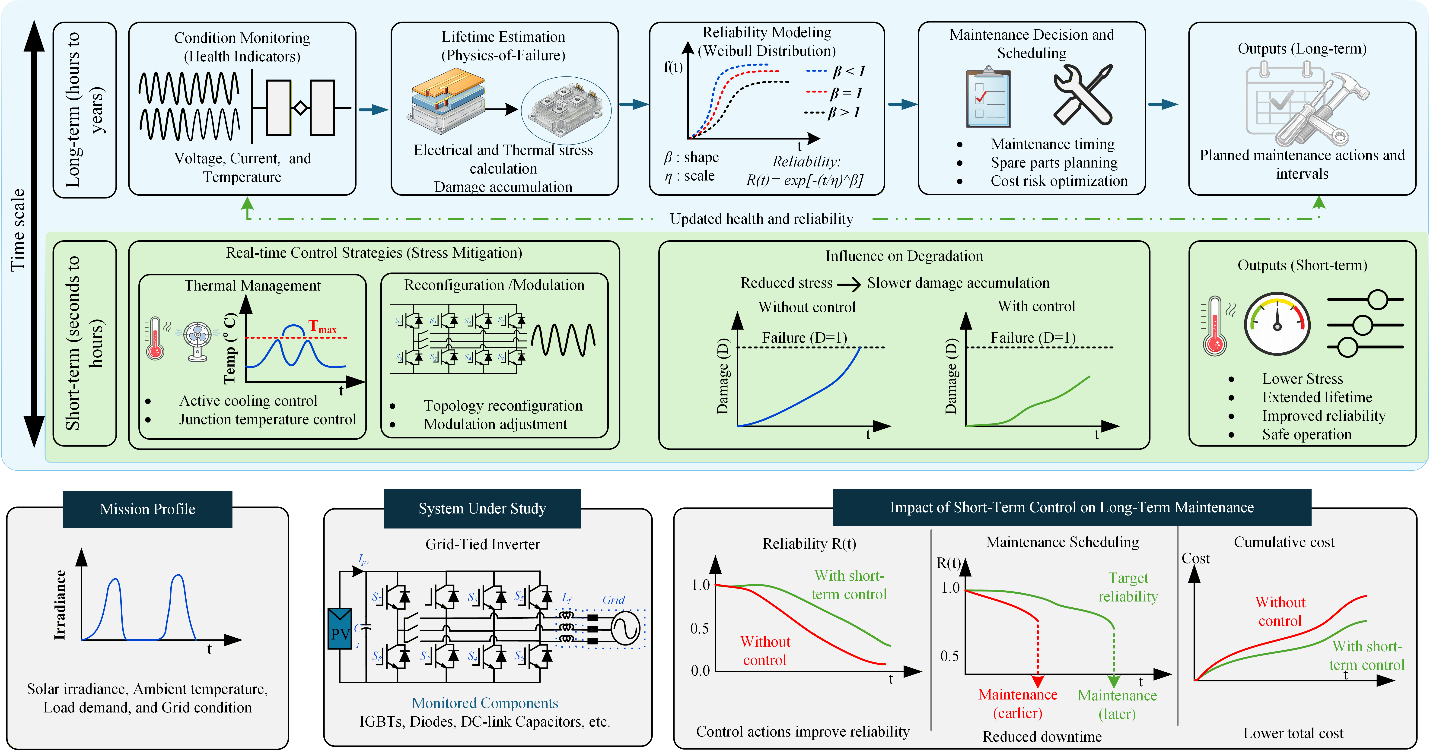
Figure 2. Intelligent maintenance framework combining condition monitoring, reliability modeling, and real-time control strategies.
Solution 3: Intelligent Control for Lifetime Extension
Predicting degradation is only part of the solution. The next step is to actively reduce the operating stresses responsible for component aging.Our research investigates intelligent control strategies that minimize thermal and electrical stress experienced by power semiconductor devices. Examples include dynamic thermal management and converter reconfiguration using redundant hardware. These control methods reduce temperature fluctuations, which are among the primary causes of fatigue in power electronic components. Lower temperature variation slows material degradation, extends component lifetime, and improves overall inverter reliability. Rather than allowing components to age as quickly as operating conditions permit, intelligent control continuously adapts the inverter operation to preserve the health of critical components.By reducing thermal stress and slowing damage accumulation, intelligent control strategies contribute to longer component lifetime, lower maintenance requirements, and improved inverter reliability. These approaches directly support KPI 1.7 of the SOLARIS project by targeting a 10% enhancement in inverter lifetime compared with conventional inverter topologies.
Solution 4: Fault-Tolerant Inverter Operation
Another promising innovation is the development of reconfigurable inverter topology. Conventional inverters often stop operating when a switching device fails. A reconfigurable inverter includes an additional switching leg that serves as a built-in backup. A useful analogy is a vehicle carrying a spare wheel. When one wheel develops a problem, the journey can continue after switching to the spare rather than stopping completely. The same principle applies to solar inverters. When a fault is detected, the intelligent controller automatically isolates the damaged switching leg and activates the redundant one. This allows the inverter to continue supplying electricity while maintenance can be scheduled at a more convenient time. Instead of causing an immediate shutdown, certain faults become manageable operating events, significantly improving system availability. This supports KPI 3.3, which aims to increase the production-based availability of PV inverters by 0.5% through improved converter fault-tolerant operation.
Performance Improvements
The greatest benefit comes from combining these four solutions into a single intelligent framework.
- Continuous condition monitoring provides information about component health.
- Reliability models estimate the remaining useful lifetime.
- Intelligent control actively reduces the stresses that accelerate degradation.
- Fault-tolerant operation allows the inverter to continue operating when certain failures occur.
Together, these solutions enable smarter maintenance decisions, lower operating costs, and more reliable PV systems.
Our reliability analysis demonstrates that introducing a redundant switching leg increases the B10 lifetime of the studied PV inverter from 15.9 years to 18.3 years, representing an improvement of approximately 15% over the conventional inverter configuration. This demonstrates how fault-tolerant converter architectures can significantly enhance the long-term reliability of PV systems. Beyond demonstrating improved reliability, these research outcomes directly contribute to several measurable objectives defined within the SOLARIS project.
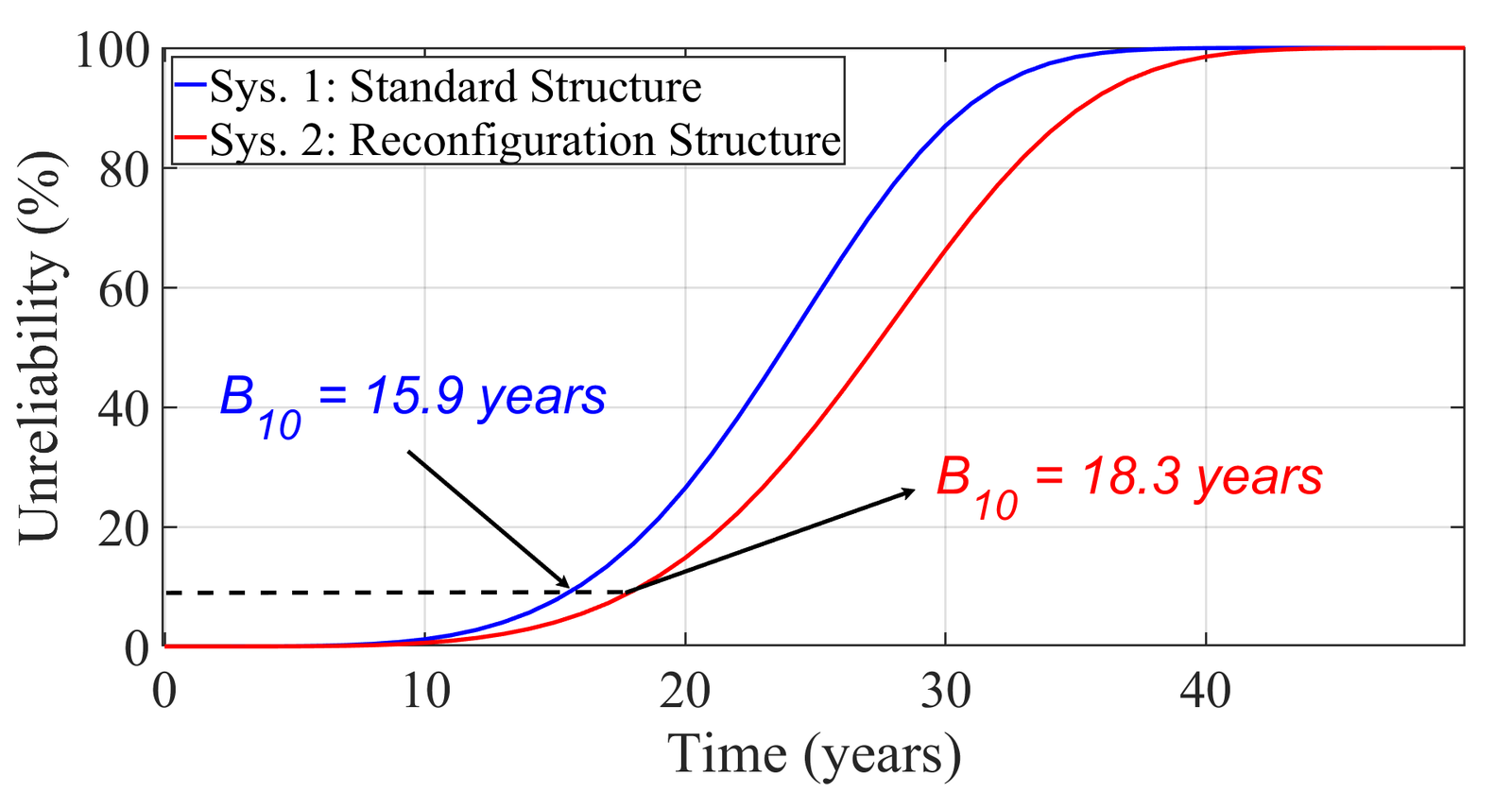
Figure 3. Comparison of system reliability with and without inverter reconfiguration.
Expected Impact and Key Performance Indicators
The intelligent inverter topology developed at Aalborg University contributes directly to several key objectives of the Horizon Europe SOLARIS project by improving the reliability, availability, and maintainability of PV inverters.
The proposed topology contributes to the following SOLARIS project key performance indicators (KPIs):
- KPI 1.7: Achieve a 10% enhancement in PV inverter lifetime compared with conventional PV inverter.
- KPI 2.3: Achieve a 30% reduction in PV inverter inspection time and downtime through intelligent condition monitoring and reliability-based maintenance planning.
- KPI 3.3: Increase the production-based availability of PV inverters by 0.5% through intelligent control and fault-tolerant inverter operation.
Smarter Maintenance Through Reliability-Based Decision Making
Maintenance planning is not only about preventing failures. It is also about determining the right time to intervene.
Replacing components too early increases maintenance costs and wastes useful component life. Waiting too long increases the likelihood of unexpected failures and production losses.
Reliability-based maintenance planning combines health information from condition monitoring with lifetime prediction models to identify the replacement age that minimizes long-term system unavailability while balancing maintenance costs.
This approach enables operators to move away from fixed maintenance schedules towards data-driven maintenance decisions, improving both system reliability and economic performance. By reducing unnecessary inspections and enabling maintenance to be scheduled according to the actual health of inverter components, this approach directly contributes to KPI 2.3, which targets a 30% reduction in PV inverter inspection time and downtime.
Figure 4 illustrates how reliability-based maintenance planning identifies the optimal replacement age that minimizes long-term system unavailability, thereby contributing to reduced inspection time and improved maintenance efficiency.
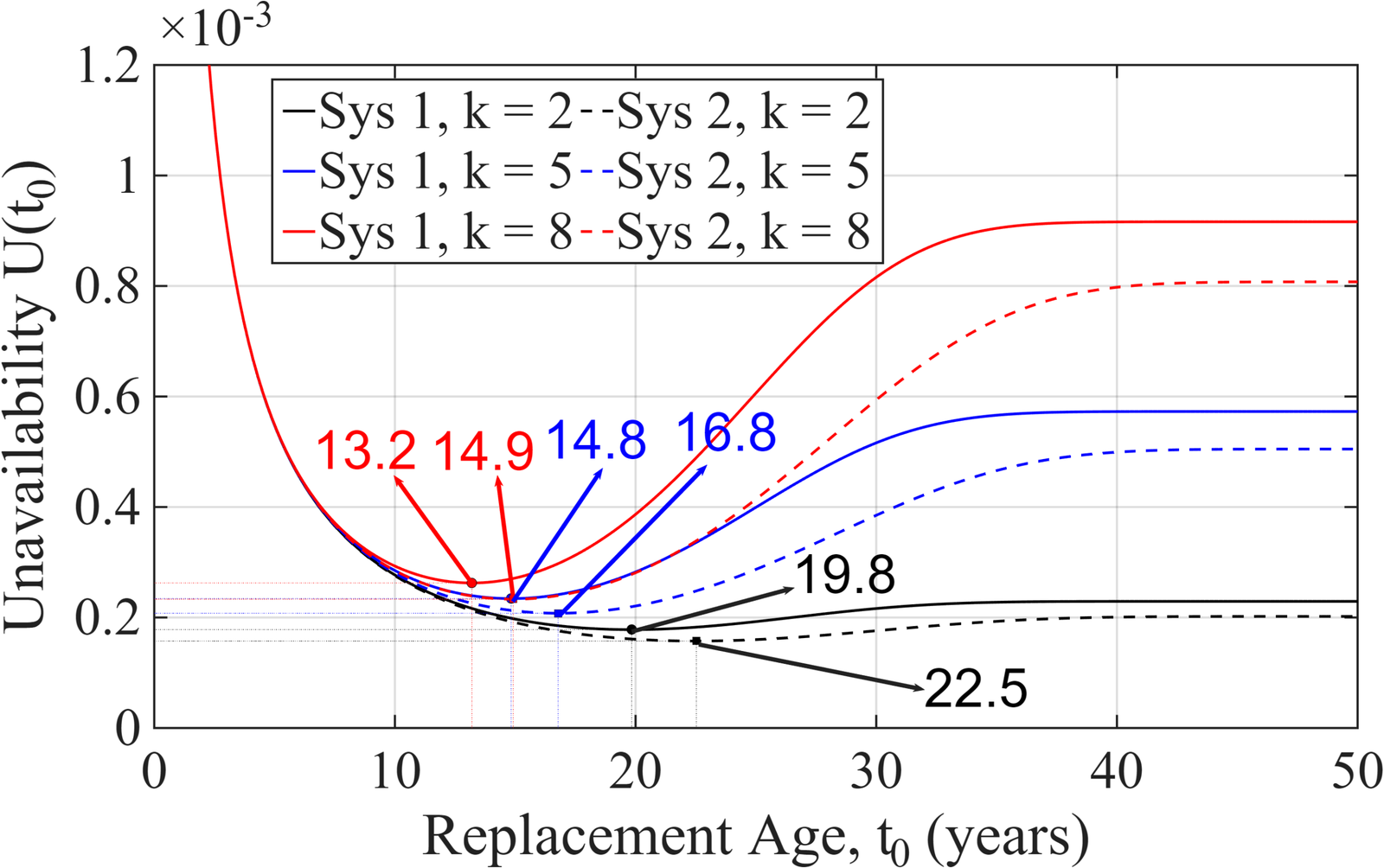
Figure 4. Maintenance optimization using condition monitoring and reliability-based lifetime assessment.
Supporting Europe’s clean energy future
Europe’s renewable energy ambitions require not only more PV installations but also more reliable ones. As solar energy becomes an increasingly important part of future electricity systems, intelligent power electronics will play a central role in ensuring reliable and efficient energy conversion. Future solar inverters will do much more than convert electricity. They will continuously monitor their own condition, estimate remaining lifetime, reduce harmful operating stresses, adapt to component faults, and support smarter maintenance decisions. By combining advanced control, condition monitoring, reliability engineering, and fault-tolerant converter design, the Horizon Europe SOLARIS project is helping develop the next generation of PV systems that can operate more efficiently, more reliably, and for longer.
Further reading: More detailed technical results from this research will be available soon in our forthcoming peer-reviewed publications, where the proposed methods, reliability models, and experimental validation will be presented in greater detail.
 French