
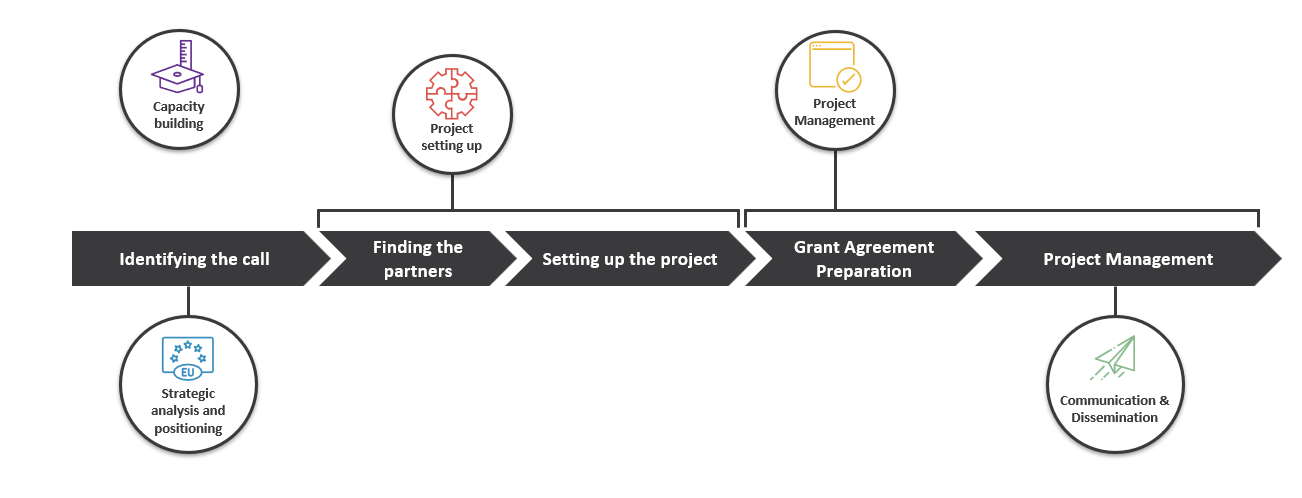

Gauthier Bouchenoire, Energy Unit consultant at Euroquality. Euroquality support partners throughout the proposal set-up phase, from shaping the initial idea to building the consortium and structuring the project. Depending on the needs, we also offer lighter, targeted support to complement internal resources. SOLARIS is one of the many EU-funded projects set up by Euroquality.
Introduction: Solar energy is central to Europe’s energy transition
Solar energy has become a strategic pillar of the European Union’s energy transition. It is one of the cheapest[1] renewable technologies available today. Over the past decade, the cost of photovoltaic electricity has dropped by around 82%[2], making solar power a cornerstone of Europe’s decarbonisation, energy security, and competitiveness goals.
At the same time, solar deployment across Europe is accelerating rapidly. Installed capacity is expected to grow from 207 GW in 2022 to more than 400 GW by 2025[3], with a clear target of 600 GW by 2030. This scale-up represents a major success, but it also marks a turning point.
As solar penetration increases, complexity grows alongside capacity. Performance losses due to weather variability, soiling, ageing equipment, rising operation and maintenance costs, and tighter integration with electricity grids and markets are becoming more significant. In response, installed solar capacity in Europe is no longer growing at the same pace, with a 0.7% contraction forecast between 2024 and 2025, the first slowdown since 2016[4]. This highlights a critical reality: installed capacity alone is no longer enough.
The focus is no longer only on installing more capacity, but on making existing and future solar plants perform better over their entire lifetime. This means improving operation and maintenance practices, reducing losses, and leveraging digitalisation to increase reliability, availability, and energy yield.
Supporting European project is to turn strategy into reality and financing solar energy deployment
Meeting these challenges requires not only technological innovation but also substantial support and investment. The European Commission has recognised this need and is actively funding research and development through programmes such as Horizon Europe and other initiatives, including the LIFE and Innovation Funds fund. For instance, EU financing for energy-related projects under Cluster 5 amounted to approximately €320 million in 2024 alone[5].
Through Horizon Europe, the EU continues to promote research and innovation aimed at reducing the cost of solar energy technologies, while improving their efficiency and sustainability. These emerging technologies already achieve higher performance levels than current commercial solutions.
In addition, Horizon Europe supports the European Partnership for Clean Energy Transition (a collaboration between the EU, Member States, and the energy industry). This partnership brings together funds and resources from countries, companies, and public organisations to advance solar energy research and innovation from 2021 and 2027. Its objective is to coordinate research efforts across Europe by establishing a unified solar energy research and innovation agenda within the European Research Area. This strategy is grounded on the Strategic Energy Technology Plan, which serves as the EU’s roadmap for developing new energy technologies.
Innovation as a lever: from hardware to digital intelligence
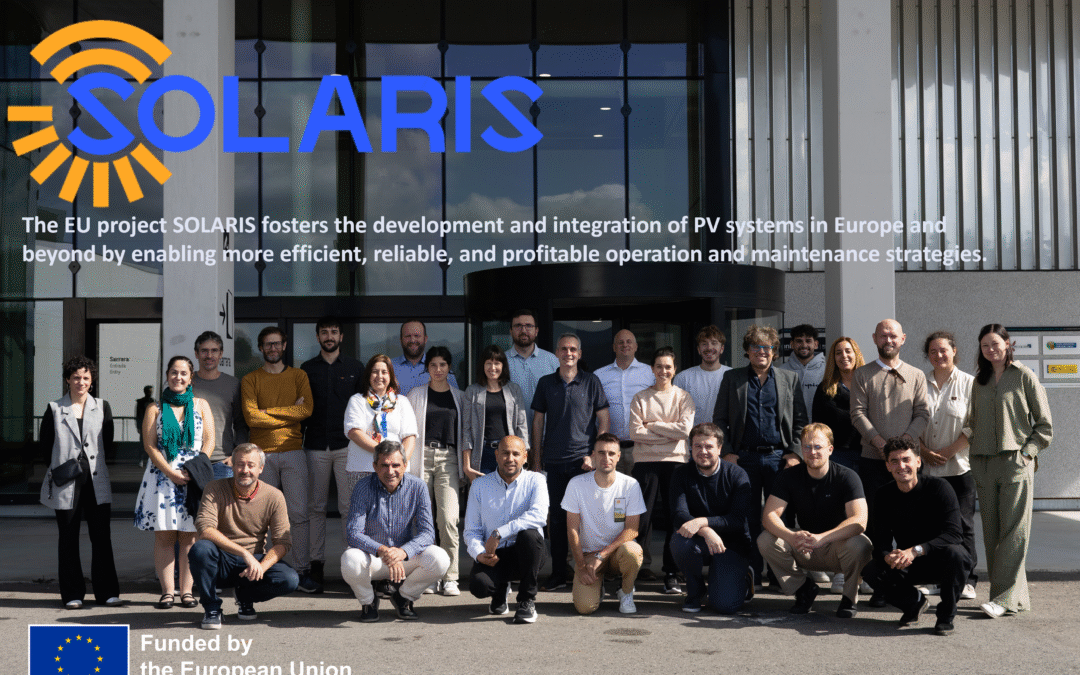
Thanks to this investment and coordinated efforts, European researchers and companies are developing smarter, more efficient solar technologies. A prime example of this progress is our project, SOLARIS. SOLARIS aims to develop and demonstrate a comprehensive set of both physical and digital solutions that meet the evolving needs of the photovoltaic industry. The project focuses on improving weather and power forecasting, enhancing operational performance, optimising maintenance strategies, and ultimately increasing the profitability of PV systems across their lifetime.
A major strength of SOLARIS lies in its real-world validation. The project’s solutions are tested across a wide range of PV use cases representative of Europe’s solar landscape, from ground-mounted small and utility-scale plants to rooftop installations, agrivoltaics, and floating PV systems. By involving different stakeholders and operating conditions, SOLARIS ensures its innovations are scalable, adaptable, and relevant throughout Europe.
Together, these developments illustrate how European research and innovation funding is enabling a new generation of solar technologies, combining advanced hardware with digital intelligence to make solar energy more reliable, efficient, and economically sustainable.
Conclusion: a smarter solar future for Europe
Solar energy today is about more than simply installing additional panels. As Europe accelerates toward its 2030 climate and energy goals, the real challenge lies in ensuring that solar power plants operate efficiently, reliably, and profitably throughout their lifetime. This shift from capacity-driven growth to performance-driven optimisation marks a pivotal new stage in Europe’s energy transition.
Driven by strong political commitment and significant investment, the European Union is laying the groundwork for this transformation. Programmes such as Horizon Europe not only fund innovation, but also foster collaboration among researchers, industry players, and end users to deliver tangible solutions that address real-world operational challenges.
Projects like SOLARIS show how this vision Becomes reality.
Through the combined power of European investment, collaborative innovation, and forward-looking projects, like SOLARIS, Europe is paving the way toward a more resilient, efficient, and sustainable solar energy system, one that strengthens energy independence and supports long-term climate objectives.
- [1] https://data.consilium.europa.eu/doc/document/ST-9453-2022-INIT/en/pdf
- [2]https://eur-lex.europa.eu/legal-content/EN/TXT/?uri=COM%3A2022%3A221%3AFIN&qid=1653034500503#footnote3
- [3] https://energy.ec.europa.eu/topics/renewable-energy/solar-energy_en
- [4]https://www.solarpowereurope.org/press-releases/new-report-eu-hits-2025-solar-target-but-market-contraction-puts-2030-goal-at-risk
- [5] https://cinea.ec.europa.eu/news-events/news/horizon-europe-energy-over-eu300-million-available-fund-new-energy-research-projects-2025-09-16_en
 French